

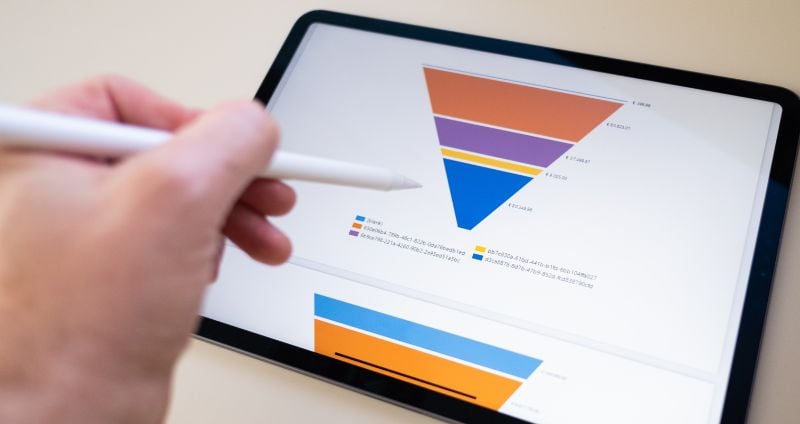
Funnels are everywhere.
Landing pages.
Email sequences.
Automated follow-ups.
They’re often positioned as the solution to inconsistent revenue – and in isolation, they can work very well.
The problem arises when funnels are mistaken for complete revenue systems.
They’re not the same thing.
What Funnels Are Actually Good At
Funnels excel at a specific job.
They’re designed to:
- Guide attention
- Capture intent
- Move prospects through a defined path
- Automate parts of the buying journey
Used correctly, funnels reduce friction at the top and middle of the funnel.
They are powerful components – but they are still components.
Related Post: CRM is Not Software – It’s a Business System
Where Funnels Fall Short
Funnels are inherently linear.
They assume:
- A predictable buyer journey
- Consistent behaviour
- Minimal variation
In reality, most buying journeys are not linear.
Prospects:
- Pause and return later
- Jump between channels
- Ask for human interaction
- Move at different speeds
Funnels struggle when real-world complexity enters the picture.
Revenue Systems Are Designed for Reality
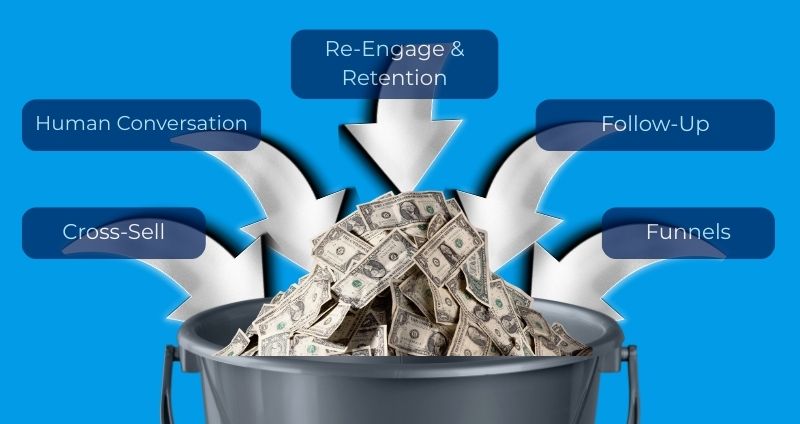
A revenue system goes beyond a single path.
It accounts for:
- Multiple entry points
- Human-led sales conversations
- Follow-up over time
- Re-engagement and retention
- Cross-sell and lifetime value
Rather than forcing prospects through a sequence, revenue systems respond to behaviour.
They’re adaptive, not prescriptive.
Related Post: From Disconnected Tools to Unified Growth Engine
Funnels Sit Inside Revenue Systems
The most effective businesses don’t abandon funnels.
They contextualise them.
In a well-designed revenue system:
- Funnels support specific stages
- CRM governs the overall journey
- Automation enforces consistency
- Humans remain involved where needed
Funnels work best when they’re connected to something larger.
Why Funnels Alone Create False Confidence
Funnels often produce early wins.
Leads increase.
Opt-ins improve.
Activity goes up.
But without a broader system:
- Follow-up becomes inconsistent
- Leads go cold after the funnel ends
- Reporting doesn’t reflect reality
- Revenue remains unpredictable
This creates a dangerous gap between perceived progress and actual performance.
Related Post: Why ‘More Leads’ Rarely Fixes a Broken Sales System
Designing for Long-Term Revenue
Revenue systems are built with longevity in mind.
They prioritise:
- Visibility across the entire lifecycle
- Consistency regardless of volume
- Clear ownership and accountability
- Feedback loops for improvement
Funnels play a role – but they’re not the foundation.
The
Bottom
Line
Funnels help generate movement.
Revenue systems create momentum.
When funnels are designed as part of a broader system, they deliver consistent results instead of isolated wins.
That’s the difference between activity and sustainable growth.
Check Out More Here